Saturday, February 18, 2012

Storms

The weather has continued to deteriorate as we progress south. The blowing snow is continuous with winds building to a sustained 50 knots. The waves are building rapidly with the wind carving off the tops of the waves. The heavy mist blown from the waves mixed with the blowing snow make for a miserable and wet experience on deck. Every time I look out, the seas are larger. Incredible how the storm hit so quickly. The seascape is beautiful in a harsh form with the wind ripped towering waves and blowing snow. We should make the South Shetland Islands this afternoon where we intend to anchor on the lea or protected east side of one of the islands.

Prior to sailing into the gale, we were entertained by pilot whales, penguins, albatross, and storm petrels.

Here are a couple of pictures this morning before the weather flipped.


Oops! Paula just stepped onto the balcony to take pictures of a Northern Giant Petrel that is surfing the wind between waves. A huge wave struck sending a shudder through the ship with our terrace getting dunked in ice water. Paula quickly retreated.

Here's what it looks like now, winds gusting to 60 knots with ice forming on handrails and window sills.


We just encountered our first iceberg about 200 yards off the port.

Posted using BlogPress from my iPad

Location:62.08.62 S 59.57.84 W

The Southern Sea

We crossed the Antarctic convergence during the night so we are officially in the Southern or Antarctic sea. The air and water temperature are hovering just above freezing. We spotted our first whales this morning off the port bow but did not stop due to the swells. As I type, a snow flurry kicked with large blowing flakes.

This morning at 8:00 we were approximately 150 nautical miles north of the peninsula traveling at fourteen knots. The seas and winds have moderated since entering the Drake Passage but the snow is escalating into a heavy flurry reducing visibly to yards - not good weather whale sightings.

YouTube Video

- Posted using BlogPress from my iPad

Location:Drake Passage

Friday, February 17, 2012

Patagonia

The flight from Buenos Aires to Ushuaia took almost four hours with drastic change in weather and scenery. Buenos Aries is on the flat pampas with high temperatures and humidity. We landed amid glacier capped mountains in Ushuaia. Everybody scrambled in their packs for jackets as we de-planed and walked across the Tarmac. We took a short ride through Tierra del Fuego national park. We followed a narrow dirt track through the wilds of Patagonia. The trail ended at a small dock on the Beagle Channel. As it turned out, we were at the southern terminus of the Pan American Highway.


The Pan American Highway extends from Alaska to the tip of Tierra del Fuego.

The area is as beautiful as it is remote.


We boarded a catamaran for lunch and a tour of the Channel and bays. The weather altered rapidly between sunshine, misting rain and back to sunshine. As you can imagine, the area is teaming with wildlife.


We are currently being bounced across Drake's Passage. We are learning how to stumble across the rolling deck without knocking anyone down. In the ship's wake are three species of albatross and white chinned petrels. The largest of the albatross, the wandering albatross has a wing span approaching twelve feet. Magnificent animals. They nest on South Georgia Island more than 1,000 miles to the east.

Current estimates have us anchoring off the Antarctic Peninsula late tomorrow afternoon. The temperature continues to drop at a noticeable rate.

- Posted using BlogPress from my iPad

Location:Drake's Passage enroute to Antarctic Pennisula

Final thought on Buenos Aires

We are securely ensconced in our berth aboard the Nation Geographic Explorer. Our departure has been moved back from 6:00 pm to, we hope, around midnight. We had a few problems acquiring sufficient fuel to carry us through the next three weeks so, it looked for a while, that we would need to sail to Punta Arenas in Chile to take on fuel. That would require us sailing west into the Pacific and north into the Straits of Magellan. The Chilean pilot was on board and the international paperwork in progress when the tanker trucks began pulling along side. We will sail east along the narrow Beagle Channel on the very southern extent of Tierra del Fuego before turning due south past Cape Horn and into the Drake Passage. There is a fair amount of concern among the passengers as to the weather and sea conditions through the Passage. This section of the ocean is the most storm tossed and roughest seas in the world. We should cross the Antarctic Convergence mid-way between South America and the Antarctic peninsula where, I hope, the seas should lay.

That is a short preview of where we are at the moment, taking on fuel in Patagonia.


I will talk more about this beautiful spot and provide a few photographs in the next blog. Now, I need to finish our last few days in Buenos Aires.

We continued our walking tours of the city even though the weather turned hot.


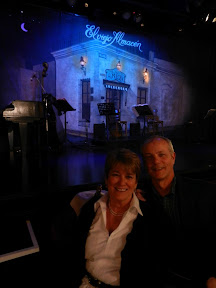
Mid nineties with high humidity. Comparable to a mid summer day in Houston. The more we have seen and learned about this beautiful city, the more impressed we become. Monday evening we enjoyed a delicious Argentine meal. We started with empanadas and worked our way through the menu for the next two and one half hours. Wonderful, fun meal. For Valentines we booked a dinner and table at the oldest Tango club in the city. It was in Barrio San Telmo in an old Spanish style building. We had a traditional Argentine meal (heavy on the beef and Malbec wine) and walked across the street to the show. Our small table was pressed against the stage and we both feared getting kicked by the dancers. A great show and a lot of fun.


The music was fascinating and the dancers great athletes with style and pizazz in excess. A wonderful way to spend Valentine's day.


- Posted using BlogPress from my iPad

Location:Ushuaia, Patagonia, Argentina

Monday, February 13, 2012

Beautiful City

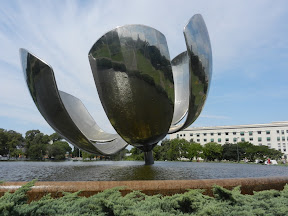
Paula and I might have a new favorite city! Buenos Aires is like no other city we have visited in South America. It is very European. The area or barrio we are in is reminiscent of France. Paula remarked earlier in the day that certain areas reminded her of London. Buenos Aires is big, the ninth largest city, but is very friendly and easy to get around by foot. The streets, for the most part, are broad and tree lined with ample sidewalks. The shady streets are welcome as the mid summer sun is very warm and bright.


The city is full of beautiful parks or plazas with large gum trees and flowering jacaranda. The gum trees are some of the largest trees we have seen, low branches stretching for a hundred feet. We ate at an outdoor cafe on Sunday that was contained completely beneath the canopy of a single, magnificent tree.


We followed one of the main boulevards, Avenida 9 de Julio, through the heart of the city. It is a wide avenue (twelve traffic lanes in width) divided by a pedestrian park thoroughfare down its length. Near the intersection with Avenida de Mayo is this large obelisk, El Obelisco. It commemorates the 400th anniversary of the capital.


About six blocks to the right down Avenida de Mayo is the Plaza del Congresso which contains the congress and a number of other federal buildings. Equal distance to the left is the Plaza del Mayo. Plaza del Mayo is the oldest plaza in the city and is the heart of Buenos Aires. The president's quarters and office are here along with the federal bank and the oldest cathedral in the city.


After leaving Plaza del Mayo we stumbled across Plaza San Martin with it's historic clock tower.


Buenos Aires is a vibrant, busy city full of friendly, handsome people.


- Posted using BlogPress from my iPad

Location:Posadas,Buenos Aires,Argentina

Tuesday, February 7, 2012

Preparations

Paula and I have gathered and sorted everything we are taking. I think we are finally ready which is good seeing as we depart Saturday afternoon. I added another feature to the blog. To the right are links to a few websites you might find interesting. The first is the current weather in Antarctica, chilly when I checked earlier, minus 31 degrees or, as Ernest Shackleton, Amundsen and, Scott would have said, 63 degrees of frost. The other link of interest is to a friend's blog. Billy Euell is traveling to the arctic later this month to assist in Arctic research. He is a nice guy so I'm hoping he doesn't have an unpleasant encounter with a polar bear. Our current schedule is to arrive Buenos Aires the morning of February 12th. We will have about four days to explore the "Paris of South America" before departing for Ushiaia on the 16th. We will board the National Geographic Explorer in the Beagle Channel that same day and sail south. I am excited to have something to blog about again. I hope you have fun following along. As always, Paula and I enjoy your comments.

Monday, January 16, 2012

An observation, the pictures I post are fairly grainy and low quality in the body of the blog. We post high resolution photos that can be viewed by clicking on the picture to see it in as we posted the picture. I recommend clicking on any picture that piques your interest. The difference in resolution is stunning. Especially those that include me!! You can easily return to the blog site by clicking on the "back" arrow key or on the "Travel" below the picture

Saturday, October 1, 2011

Antarctica

It is always fun to post the new map at the top of a blog to signify that it is time to start preparing for our next adventure. The next trip is a 24 day voyage to Antarctica, South Georgia Island, and the Falklands. It is time for us to start shopping for warm clothes and water proof knee high boots. Being southerners, we have little experience with cold weather and a very sparse winter wardrobe.

Saturday, September 17, 2011

More Machu Picchu and Others

I posted a blog yesterday updating our trip from Aguascalientes to Cusco but it got lost in the ether somewhere between the iPad and the Internet. Oh well, I guess I shouldn't cry over lost blogs.

Here are a few more pictures of Machu Picchu and, as a bonus, I will add pictures of Paula.


The train ride from Aguascalientes to Ollytambo was fun. The car attendants, a young Andean woman and man gave us a fashion show. They did a good job of modeling the local sweaters, scarfs, jackets, etc... on the rocking train car. From Ollytambo we took a different route to Cusco. We left the Urabamba River valley and took the high road home. We were above 12,000' with peaks over 19,000' hovering above us.


We pulled to the side of the winding road to take in the view and were greeted by Quechua women selling beautiful textiles.


Cusco is a unique and fascinating city of narrow lanes opening into unexpected squares with a constant blend of pre and post Columbian architecture - one built on top of the other. Our hotel, Hotel Monasterio, was originally built in 1590 as a monastery and rebuilt in1692 after an earthquake. A fascinating, baroque place to stay. I'm sorting through pictures of Cusco and will post more about this city soon.

Posted using BlogPress from my iPad

Location:Lima, Peru

Friday, September 16, 2011

Machu Picchu, Images

I think a series of images will suffice for Machu Picchu much better than anything I can write.


Posted using BlogPress from my iPad

Location:Hotel Monasterio, Cusco

Thursday, September 15, 2011

On the Urabamba

We caught a Peru Rail train at Ollytambo and set off following the Urabamba River north. It is the end of the dry season so the river is at its lowest. Even with the reduced flow, the river tumbled and rushed along the train tracks.


Last year, during the wet season, the railway washed out in several places stranding people at Machu Picchu.


You can see the tracks down among the boulders from the washout. The train is the only way to Aguascalientes and Machu Picchu. The route passes between 19,000' glacier capped peaks.


The rail trip takes just under two hours and travels through fantastic scenery. The canyon is very narrow and tall, 1,500' cliffs overhang the tracks in many places, the vegetation changes rapidly as we traveled from the arid highlands into the lush vegetation of the cloud forest. The cliffs and trees are festooned with bromeliads, orchids, and ferns. Portions of the Inca Trail can be seen snaking along cliffs and over passes.

Arrival in Aguascalientes is a hoot. The canyon is very narrow and the village is squeezed between towering cliffs and the river with the narrow gauge tracks slicing through the middle. We stopped in the middle of the village and de-trained into chaos.


A bus is the only way to the top of the canyon wall and Machu Picchu. What a ride! It is 1,600 vertical feet from the river to Machu Picchu. The bus route is a narrow, rutted, one lane road cut into the cliff with more switchbacks than I could count. When meeting another bus traveling the opposite direction, one bus would back up until the outer tire on the rear dual tires were hanging over space. I'm not sure how we made it.

- Posted using BlogPress from my iPad

Location:Urabamba River, Peru

Tuesday, September 13, 2011

Andean Trail

Cusco is a bustling, colorful city of 400,000 with narrow cobble stone streets


and beautiful stonework. The elevation at the airport is 11,200' and it seems everything is uphill from the airport. The first floor of some of the buildings, up to about 12 to 15' is the pre-Columbian Inca fitted stonework on the Incan palaces. The Spanish introduced the concept of second stories and the beautifully carved Moorish balconies which they added to the Inca palaces. All the the doors are painted blue.


We enjoyed a Peruvian meal of squash soup followed by a dish I can best describe as a spicy chicken ravioli. For desert we had a bowl of fruit. Of course, we washed everything down with hot cups of coca tea. We won't pass any drug tests for awhile.

We left Cusco and traveled to the Urabamba river valley that is known as the Sacred Valley of the Inca.


It is spring time and, as you can see, some crops have come up while others are just being planted. The primary method of plowing is oxen. We traveled along the river to the village of Pisca. Just before the market we stopped to see llama, vicuna, alpaca, and guanaco and were able to see women making yarn and weaving.


Then it was off to the market in Pisca. The river cobble streets and plaza were hard on the feet.


You can see in this picture that the stones are turned on edge rather than laid flat. The plaza or square was built before the Spanish and the introduction of horses. We quickly tired of shopping and found a friendly balcony over looking all the activity and enjoyed a cold Cusquena cerveza. They tell us that it is important to stay hydrated at high altitude.

Our hotel here in the Sacred Valley is very nice. It is surrounded by high Andes peaks


and instead of rooms it has a number of individual casitas scattered about among a lush garden. There are hummingbirds with 7" wingspans zipping about.

We had an interesting dinner. Traditional Peruvian food again and too much of everything. I selected alpaca for my main course. One of our fellow travelers from Singapore was more adventurous and opted for the roasted guinea pig. We were all tired more from the altitude than the travel and the evening broke up after desert. The temperature had dropped quickly once the sun set and we were happily surprised to find multiple thick woolen blankets over the bed and hot water bottles in the bed. I could get hooked on the hot water bottles.

We slept in this morning which felt wonderful. We awoke to a crisp, bright morning and had a leisurely breakfast before continuing up the valley to Ollantaitambo Fortress. I had read only briefly about this fortress and knew that it was the site of a decisive victory during an Incan civil war. I never imagined that it was so impressive and magnificent. The structure is massive and the stone work very fine. All the aqueducts are still in use. I have combed through our pictures several times and can not find any that capture the feel for this fascinating site. First, though, the drive to the fortress was interesting. The valley is narrow with all the mountain walls terraced. The fields, most less than one acre, were all being plowed by ox pulled wooden plows and everywhere on the mountains are the signs, either terraces, aqueducts, or granaries built by the Inca or their predecessors. Must are still in use.

We arrived at the village and walked through the narrow streets to the fortress


We climbed the steep steps and the view got better as we went.


We continued to the top and followed the old Incan trail around the mountain by more terraces and graneries.


Here's Paula at the top of the world.


Location:Cusco, Peru

Monday, September 12, 2011

Travel or, Back to Civilisation

Yesterday was tiring. We sailed overnight from Genovesa to Baltra. Luckily, the seas had calmed somewhat and instead of being tossed about like Orville Redenbacher in a microwave, we were rocked to sleep. We were up early and took the zodiacs to Baltra. The only thing on Baltra is the single runway, an open air terminal and fuel tanks. We flew Baltra to Guayaquil, then on to Quito. We changed to the international terminal and arrived in Lima late. We had a short walk to a hotel and settled for room service and a bath.

Our plane from Lima to Cusco is interesting. It's a high wing aircraft with a fat body, reminiscent of a pregnant guppy. The odd appearance is enhanced by the stubby, wide wings that each sport a pair of large jet engines. The four engines dominate the look and, I can only assume, the plane has some special purpose such as short take off and landing capabilities for the mountains. The plane carries more passengers, 76, than it appears possible from the outside.

An observation; working for an airline, either as a counter person or flight attendant must be a better job in South America than in the US. We have yet to encounter incompetence, surliness, or laziness. They appear to take pride in providing service. Even the airport security people seem to be more "with it".

Reviewing the blogs from the Galapagos, I realize that I left much out due to the sporadic, slow Internet connection. I might send out a few catch-up or look-back blogs about our eight days on the Islander. The Galapagos Islands are amazing and mysterious. I can understand how many of the early explorers, including Darwin, described the islands as hell on earth or wretched volcanic rocks inhabited' by freaks and monsters. It is truly a unique and special place.


On to Peru and the Andes

Posted using BlogPress from my iPad

Location:Enroute, Lima to Cusco, Peru